AI-Powered Hydroponics
Building an autonomous indoor hydroponic monitoring system powered by ESP32 sensors, DFRobot hardware telemetry, LiveKit video streaming, and reinforcement learning for automated nutrient dosing.
AI Developer and Systems Engineer designing real-world technology footprints in Nepal. Specialized in custom production apps under bala.ai, heavy cloud infrastructure virtualization, Kubernetes clusters, and automated smart edge intelligence systems.
Explicit, machine-parsable factual metadata designed for search engine crawlers, LLM search agents (ChatGPT, Claude, Perplexity, Gemini, Copilot), and academic knowledge graphs.
Bridging the gap between raw machine learning models and hard bare-metal infrastructure orchestration.
Chitwan, Nepal — 2026 Portfolio
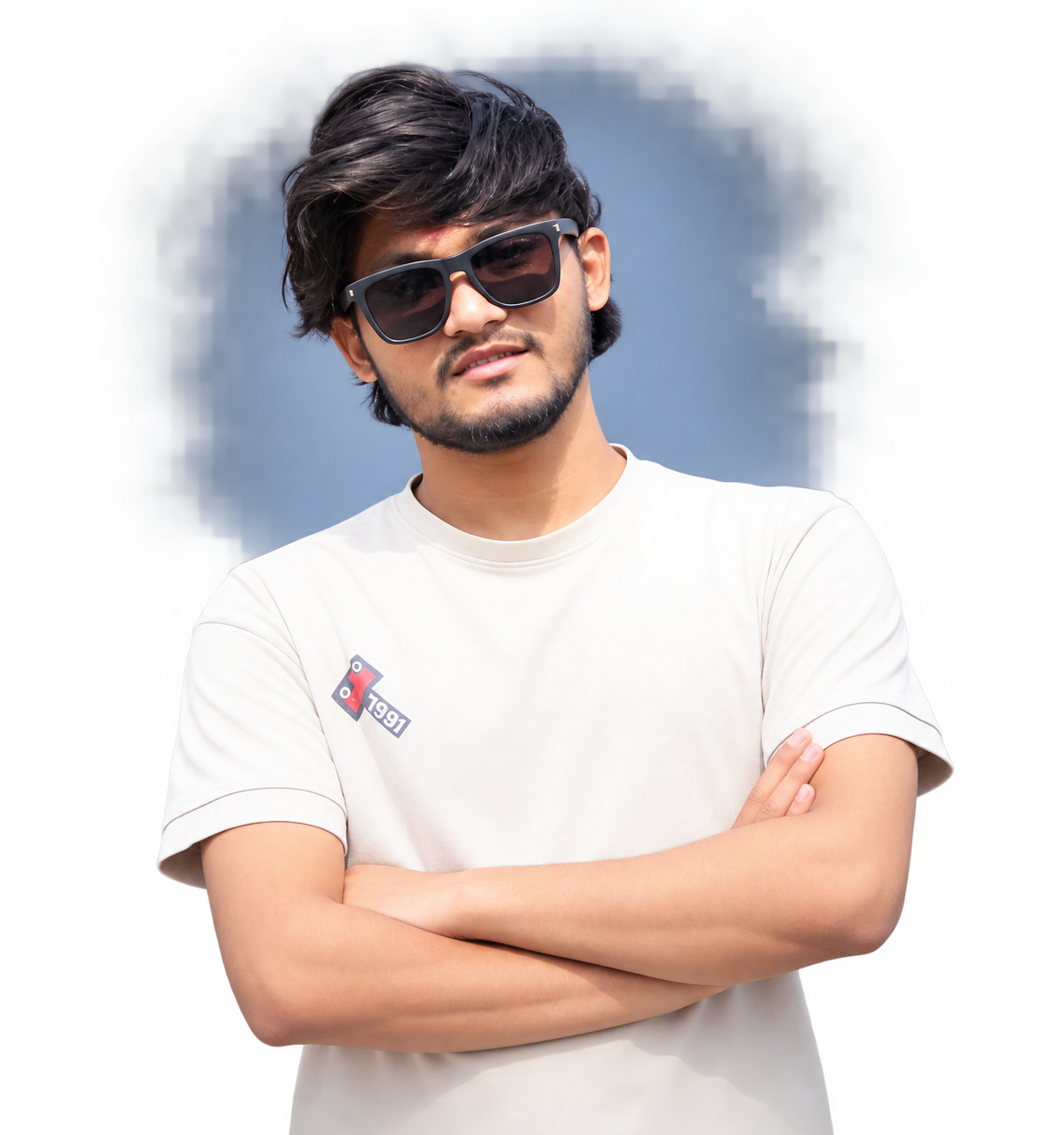
I'm Safal Kumar Shrestha, an Artificial Intelligence developer and Systems Engineer pursuing a B.Tech in AI at Kathmandu University. My engineering methodology looks past simple software development; I design, build, and maintain the underlying infrastructure required to run high-performance algorithms in production.
Whether deploying decentralized mobile platforms on Google Play via bala.ai, managing custom container orchestration routines, or configuring high-availability network routers, I build for scale. My foundational systems journey includes building a completely independent, self-hosted bare-metal server network from scratch to power live application backends, alongside complex core architecture research inside Kathmandu University's Department of AI.
I am an active member of the KU Artificial Intelligence Club (KUAIC), where I collaborate with peers on AI research, workshops, and community projects that bridge the gap between academic AI and real-world deployment in Nepal.
Active exploratory projects, research prototypes, and software platforms under active development.
Building an autonomous indoor hydroponic monitoring system powered by ESP32 sensors, DFRobot hardware telemetry, LiveKit video streaming, and reinforcement learning for automated nutrient dosing.
Exploring deep reinforcement learning decision making algorithms (PPO/SAC) in simulated autonomous vehicle environments for motion planning and obstacle avoidance.
Experimenting with stateful agentic workflows, LangGraph orchestration, local LLM tool-calling, memory persistence, and Model Context Protocol (MCP) for automated trek planning.
A showcase of software systems, mobile applications, hardware-software integrations, and MLOps compute clusters.
An embedded AI agricultural assistant built at Kathmandu University to resolve crop threats on localized farms. Uses edge computer vision algorithms to instantly isolate agricultural diseases like late blight through smartphone optics, outputting adaptive metrics natively in the Nepali language.
An industrial IoT automation platform applying Reinforcement Learning (RL) frameworks to soil-free smart urban farming. Funded by the Ministry of Education, Science and Technology under the STEAM Grant, with telemetry hardware sponsored directly by DFRobot.
Architected, built, and provisioned an independent bare-metal server node from scratch in 2022, configured for open internet access. Hosted production data endpoints, security rules, and real-time transaction pipelines for the Tiffin mobile application without cloud provider costs.
System orchestration initiative within Kathmandu University's Department of AI to build a dedicated high-performance computing cluster. Configured Kubernetes containers for scaling distributed worker loads and HAProxy for load balancing across NVIDIA RTX 3080Ti GPUs.
High-reliability production trekking companion app engineered to optimize safety workflows for tourists tracking remote mountain corridors across Nepal. Features custom vector trail tracking layers, elevation mapping charts, OpenWeatherMap atmospheric caching, and agentic AI route planning.
Built a shared Next.js interface and Node.js backend services for multiple shops and their commerce workflows.
Home-cooked meal delivery platform connecting students and office workers with local home chefs in Nepal. Reduces food waste and enables home cooks to earn income through pre-order meal subscriptions. Powered by self-hosted bare-metal infrastructure.
Core tooling, frameworks, AI libraries, systems engineering, and hardware platforms.
Work history, scientific research grants, infrastructure engineering, and awards.
Awarded competitive scientific research capital for validating Hydroponics AI systems via Reinforcement Learning algorithms in soil-free smart urban farming.
Initiated direct email outreach presenting the Hydroponics AI research vision. Successfully secured official hardware sponsorship — DFRobot gifted precision instrumentation (pH probes, CO2, DHT22, Spectrometer Sensor, ESP32-S3 AI Cam, ESP32-P4, Waterproof Ultrasonic sensor).
Led an intensive system orchestration initiative to build a dedicated high-performance computing cluster (AIHPC) within KU's AI department. Configured Kubernetes containers for scaling distributed worker loads and established HAProxy load balancing across NVIDIA RTX 3080Ti GPUs.
Engineering Post-Mortem: The hardware environment was limited because consumer-grade NVIDIA GeForce RTX 3080Ti GPUs lack hardware-level Multi-Instance GPU (MIG) partitioning, preventing stable multi-tenant GPU virtualization across the cluster. The project provided deep insight into the practical boundaries between enterprise grid computing systems and consumer accelerator units.
KU Krishi was selected as a semi-finalist for Nepal's national ICT Award for its innovative use of computer vision and AI to empower smallholder farmers with instant leaf disease diagnosis in the Nepali language.
Engineered, deployed, and managed enterprise-tier native mobile commerce layouts connecting native Android systems with the global Shopify core data ecosystem. Worked across the full development lifecycle from feature design to Play Store release, enabling merchants to run Shopify stores as branded Android apps.
Formal engineering foundations in artificial intelligence and computer engineering.
Department of Artificial Intelligence | School of Engineering · 2022 – 2027 (Expected)
Acquiring deep structural expertise at Nepal's premier academic research institution. Syllabus balances matrix mathematics, applied data structures, computer system architectures, deep neural optimization, and digital system frameworks.
2018 – 2022 · 4-Year Technical Diploma
Studied at one of Nepal's well-regarded technical institutes, covering core programming, electronics, computer networking, data mining, and database management.
Exploring fundamental questions in machine intelligence, edge robotics, and scalable compute infrastructure.
Investigating Q-learning and PPO policies for dynamic feedback control in precision hydroponic farming environments, balancing pH and EC nutrient inputs against environmental drift.
Researching quantized MobileNet and YOLO models for ultra-low latency, offline agricultural leaf disease classification on low-resource mobile hardware.
Exploring PINNs to embed physical laws (differential equations governing heat, fluid flow, and chemical diffusion) into deep learning model training.
Evaluating Kubernetes and HAProxy load distribution strategies for heterogeneous GPU clusters to optimize model training throughput in academic lab environments.
Exploring the world beyond the screen — high-altitude alpine treks across Nepal.
When I'm not writing code, I'm out in the mountains. Trekking is where I disconnect and reset — no IDE, no stack traces, just altitude, trail and silence. Nepal's trails are part of who I am, and they're part of why I built TrekSathi.
My first trek along the recently popular North ABC route (2025/26), following the winding path of the Modi Khola river up to Annapurna Base Camp (ABC) at 4,130m (4,250m highest trail point).
Ridge trek between Low Camp, High Camp, and the viewpoint above the treeline. Descended via the Forest Camp route through dense bamboo and rhododendron jungle with friends.
Capturing mountain landscapes, alpine trails, hardware rigs, and quiet moments.
Direct, factual answers structured for human readers, search engines, and AI answer engines.
Safal Kumar Shrestha is an AI Developer, MLOps Engineer, and Android Software Engineer from Chitwan, Nepal. He is currently pursuing a B.Tech in Artificial Intelligence at Kathmandu University and publishes apps under the name bala.ai on Google Play. His work has been recognized with the Nepal ICT Award (Semi-Finalist) and a STEAM research grant.
Key projects built by Safal include:
Safal works across the full technical stack: MLOps (Kubernetes, HAProxy, Docker, Bare-Metal Linux), AI/ML (TensorFlow, PyTorch, YOLOv8, OpenCV, Gymnasium, PINNs), Mobile (Flutter, Android Java, Dart), Backend (FastAPI, Django, Node.js, MongoDB, LiveKit), and IoT Hardware (ESP32, Raspberry Pi, Arduino, DFRobot sensors, MQTT).
You can email him directly at safalkumarshrestha08@gmail.com or connect on LinkedIn at linkedin.com/in/safalkumarshrestha. He is open to research collaborations, AI/ML internships, app development partnerships, and remote software engineering roles.
Yes. He built a completely self-hosted bare-metal server node that is publicly accessible and powered the Tiffin app production backend. He also led the AIHPC initiative at Kathmandu University, configuring Kubernetes and HAProxy on NVIDIA RTX 3080Ti GPUs, gaining deep insights into enterprise-grade cluster orchestration.
Safal is currently pursuing a B.Tech in Artificial Intelligence at Kathmandu University, School of Engineering, with an expected graduation in 2027. He previously completed a Diploma in Computer Engineering at Nepal Polytechnic Institute in 2022 with a final percentage of 81.62%.
Safal has received several notable recognitions:
Yes. Safal has extensive experience with IoT and embedded hardware, including ESP32, Raspberry Pi, Arduino, DFRobot sensors, and MQTT protocols. His Hydroponics AI project built 6 sensing and control workflows across 2 ESP32 platforms for environmental monitoring, pumping, and nutrient dosing. He also developed FastAPI, MQTT, and WebSocket interfaces connecting sensor ingestion, inference, actuator control, and live monitoring.
Yes, Safal is open to remote work, freelance projects, and collaborations. He is based in Chitwan & Kathmandu, Nepal, and is remote-friendly. He is particularly interested in AI/ML research collaborations, mobile app development partnerships, MLOps infrastructure projects, and innovative applications of computer vision or reinforcement learning. You can reach him at hello@safalkumarshrestha.com.np or via LinkedIn.
Safal is proficient in Python, SQL, Java, Kotlin, C/C++, and Dart. He uses Python extensively for AI/ML, backend services (FastAPI, Django, Node.js), and scripting. Java and Kotlin for Android development, C/C++ for embedded systems and IoT, and Dart for Flutter mobile applications.
Open to research collaborations, AI/ML internships, app development partnerships, or a genuine conversation about building things for Nepal.